Face Skin Thickness
The Face Skin Thickness range is:
0.1–2.0 mm
The Face Skin is the visible aluminum surface side of the panel and can be selected according to the application, appearance requirements and complete panel construction.
When specifying aluminum honeycomb panels, it is important to understand the difference between Overall Panel Thickness, Face Skin Thickness, Back Skin Thickness, and the complete honeycomb panel construction.
Panel thickness should not be selected by a fixed application rule. The final panel construction is confirmed according to the application, panel dimensions, connection or hardware requirements where relevant, and project requirements.
If you are not sure which thickness is suitable for your project, you can provide your application and available information first, and Qitianmei can discuss the appropriate panel specification with you.
Prepare an Inquiry
→ Request Quote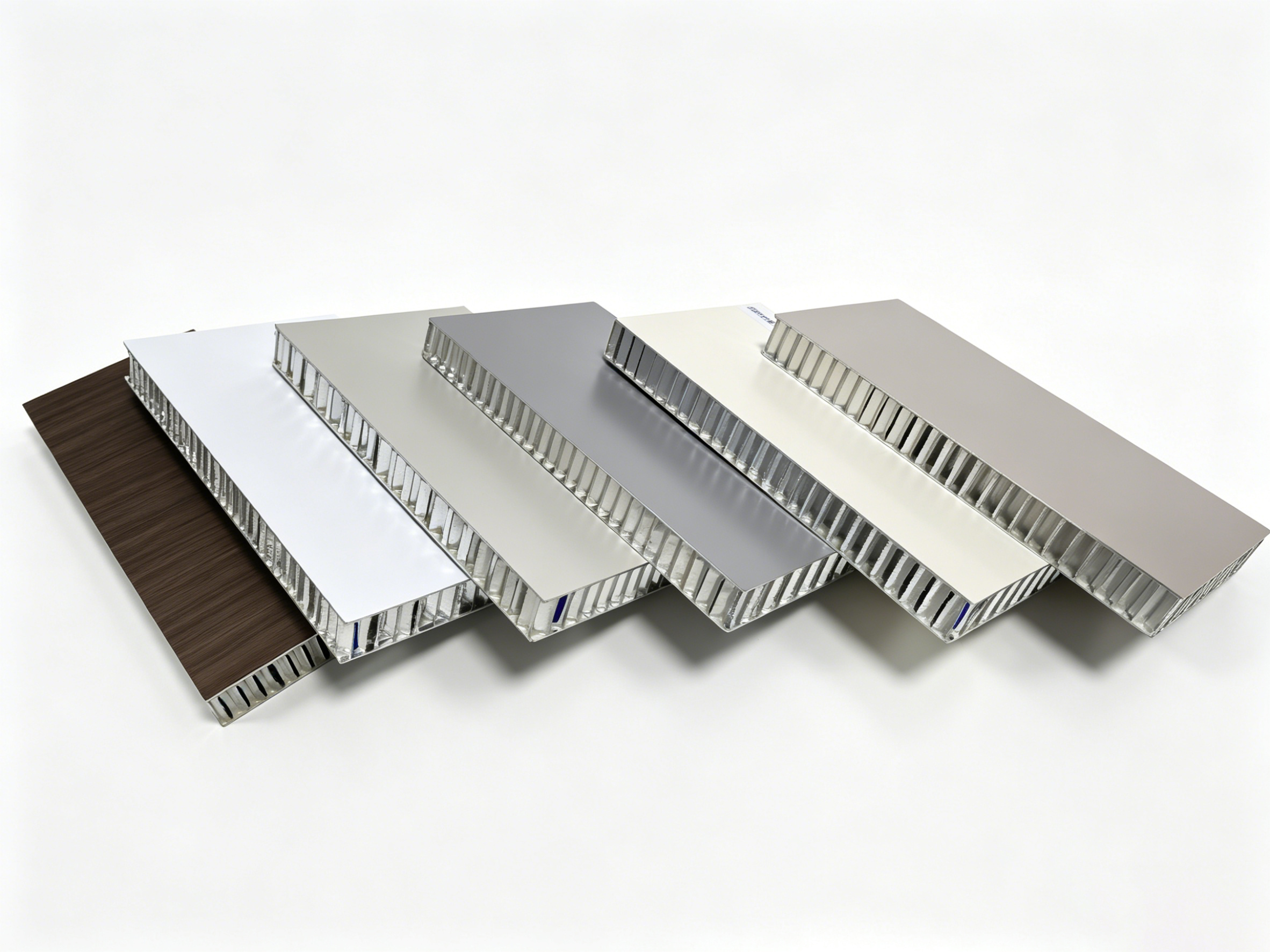
Overall Panel Thickness refers to the thickness of the complete bonded aluminum honeycomb panel.
A typical panel construction includes:
Aluminum Face Skin → PU Adhesive → Aluminum Honeycomb Core → PU Adhesive → Aluminum Back Skin
Overall Panel Thickness represents the complete finished panel structure, not only the aluminum skins or the honeycomb core.
The final thickness should be considered together with the complete panel construction and project requirements.
Learn more about panel structure:
→ Structure & MaterialsQitianmei aluminum honeycomb panels are available with an Overall Panel Thickness of approximately 5–65 mm.
This range does not mean that every thickness is suitable for every application.
The final thickness selection depends on factors such as:
There is no universal thickness that fits every wall, ceiling, furniture, cabinet or door application.
For available thickness and customization ranges:
→ Sizes & CustomizationFace Skin and Back Skin are separate specifications within the complete panel construction.
They should be defined independently according to the project requirements.
The Face Skin Thickness range is:
0.1–2.0 mm
The Face Skin is the visible aluminum surface side of the panel and can be selected according to the application, appearance requirements and complete panel construction.
The Back Skin Thickness range is:
0.1–2.0 mm
The Back Skin is specified separately from the Face Skin.
Face Skin and Back Skin can use:
depending on the project requirements.
An aluminum honeycomb panel is a bonded structure consisting of multiple layers.
The complete construction includes:
The relationship between Overall Panel Thickness and the internal structure should be considered as a complete construction.
Aluminum honeycomb foil is approximately 0.03 mm.
However, foil thickness is not the same as core height, and it is not a buyer-selected panel thickness value by itself.
When discussing the honeycomb core, buyers can provide the information they know, such as:
Current general honeycomb cell designations include:
These are cell designations.
The geometric measurement method should not be assumed from the designation alone. If a project requires specific engineering measurement definitions, this should be separately confirmed.
Panel thickness should be considered according to the complete application requirements, rather than a fixed thickness table.
For interior wall applications, thickness selection should consider:
There is no universal standard wall thickness.
Learn more about wall applications:
→ Interior Wall PanelsFor interior ceiling applications, thickness selection should consider:
There is no universal standard ceiling thickness.
Learn more about ceiling applications:
→ Ceiling PanelsFor furniture and cabinet-body applications, 12 / 15 / 18 mm are commonly discussed overall thickness options.
These are not universal standards.
The final panel construction depends on:
Learn more about furniture and cabinet applications:
→ Furniture & Cabinet PanelsCabinet door thickness should be confirmed according to:
There is no fixed standard cabinet door thickness.
Interior door panel thickness should be confirmed according to:
The final construction is determined separately for each project.
The final honeycomb core height is confirmed according to the complete panel construction.
Core height should not be calculated simply by:
Overall Panel Thickness − Face Skin Thickness − Back Skin Thickness
This simplified calculation does not represent the complete panel structure because the finished panel also includes adhesive layers and construction-specific factors.
The complete panel design should be confirmed based on the actual project requirements.
A practical thickness selection process starts with the application.
Define what the panel will be used for, such as:
The application influences the panel construction and the details that need to be confirmed.
Provide the required panel dimensions and layout information where available.
Panel dimensions can affect:
Available size ranges:
→ Sizes & CustomizationDepending on the application, confirm any relevant requirements related to:
Confirm the required Overall Panel Thickness according to the complete project requirements.
Confirm:
They can be the same or different depending on the project.
Finalize the complete construction, including:
You do not need to finalize every specification before contacting Qitianmei.
If some specifications are not yet decided, provide the information already available, such as:
The panel thickness, skin selection, core requirements and complete construction can then be discussed according to the project.
Learn more about specification preparation:
→ How to Specify Aluminum Honeycomb PanelsPrepare an inquiry:
→ Request QuoteUnderstand the product structure and applications.
→ Aluminum Honeycomb PanelReview available panel dimensions and customization options.
→ Sizes & CustomizationLearn more about aluminum skins, honeycomb core and panel construction.
→ Structure & MaterialsExplore finish and appearance options.
→ Surface FinishesLearn how to prepare a complete panel specification.
→ How to Specify Aluminum Honeycomb PanelsReview physical samples for material, structure and surface confirmation.
→ Sample OrderingIf you already know your application and requirements, Qitianmei can help you define the appropriate aluminum honeycomb panel specification.
Prepare an Inquiry
→ Request QuoteView Specifications & Customization
→ Sizes & Customization